
At Google I/O 2026 — held at Shoreline Amphitheatre in Mountain View on 20 May — Google and Samsung unveiled the first real look at Android XR smart glasses, ending years of speculation about whether the industry was ready for a serious second attempt at smart eyewear. The announcement was one of the most talked-about moments from the developer conference, and for good reason: these are not the Google Glass of 2013. What was demonstrated represents a fundamentally different product category, and it may genuinely be the beginning of the post-smartphone era.
Here is everything you need to know about Android XR smart glasses — what they are, what they can do, how they differ from Meta Ray-Ban, when they launch, and what they mean for the future of computing.
What Are Android XR Smart Glasses?
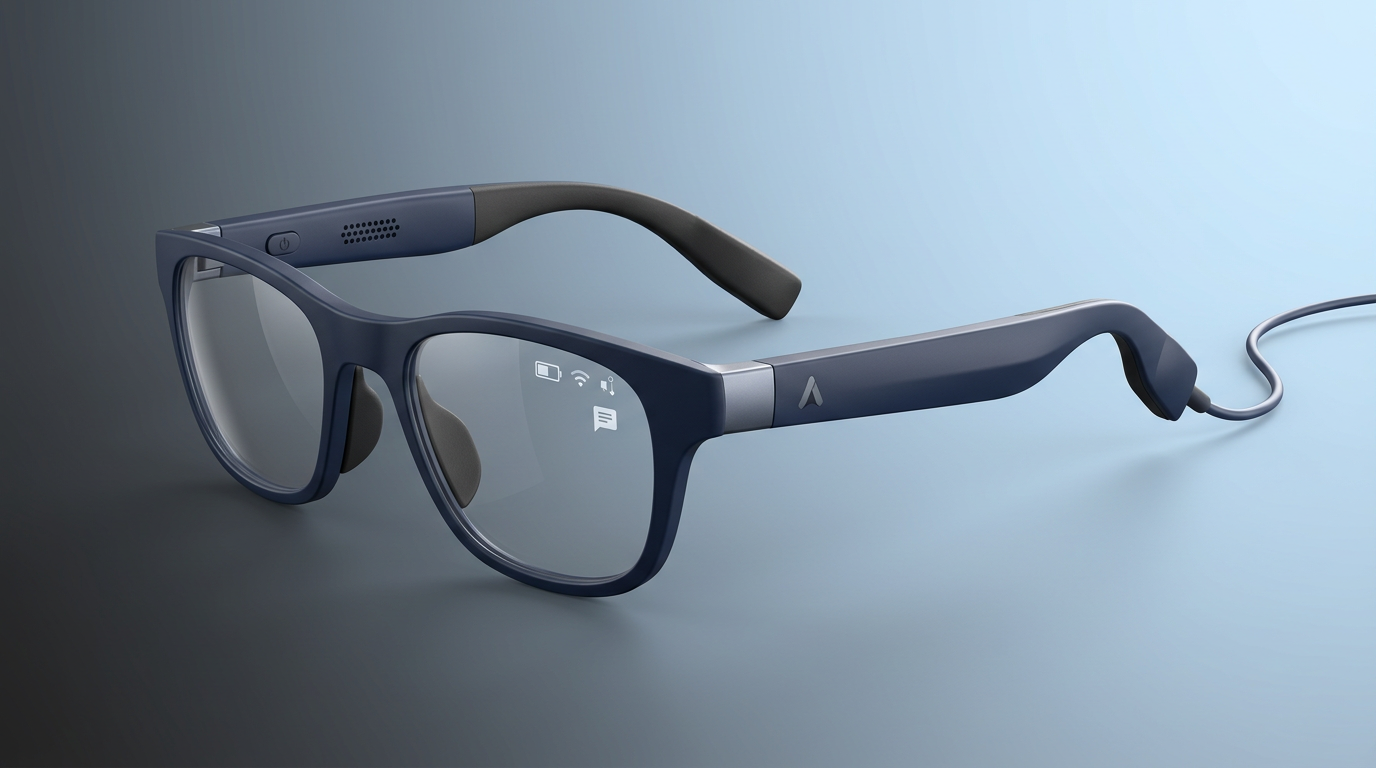
Android XR is Google’s operating system platform for extended reality (XR) devices — headsets, glasses, and future wearables that blend the physical and digital worlds. The smart glasses announced at Google I/O 2026 are the most accessible form factor running Android XR: eyewear that looks and feels close to regular glasses but contains cameras, microphones, speakers, and — in the premium model — an AR display that overlays digital information onto your visual field.
Two Models Confirmed
- Audio-first / screenless glasses: Built-in speakers, microphones, and cameras but no integrated display. Works with Gemini AI — ask questions, get help, take photos, and receive contextual information through audio. Designed for hands-free everyday use without obstructing vision. Will be lighter, cheaper, and more practical for all-day wear.
- AR display glasses: Includes an embedded display that overlays digital information onto your real-world view. Enables visual navigation prompts, real-time translation overlaid on text, notification glances, and camera viewfinder overlays — all visible without taking out your phone. Higher price, more impressive capability.
The Key Features Demonstrated at Google I/O 2026
Live Translation
The most immediately impressive demonstration showed real-time translation from Farsi to English displayed as subtitles directly in the user’s visual field. The speaker spoke in Farsi; the glasses listener saw the English translation appearing in real time as overlaid text. This feature alone, if it works consistently in the real world, represents a genuinely transformational capability — the ability to have a natural conversation with someone who speaks a completely different language, with no phone in hand and no interruption to the flow of the interaction.
Memory and Object Recognition
A feature called Memory was also demonstrated — the glasses’ cameras passively observe the environment and build a searchable memory of what the user has seen and where. The demonstration showed asking the glasses “where did I leave my keys?” and receiving a visual replay of the last location where the keys were observed. This contextual memory capability, tied to Gemini’s multimodal understanding, represents the kind of ambient AI assistance that has been theorised for years but not previously delivered in a consumer-accessible form factor.
Gemini Live Integration
The glasses run Gemini as their primary AI layer, with Gemini Live enabling real-time back-and-forth conversation. Unlike pulling out a phone and opening an app, the glasses enable contextual AI assistance hands-free — Gemini can see what you see, hear what you hear, and respond through the glasses’ built-in speakers or display without any interruption to your physical activity.
Book Scanning and Document Understanding
A demonstration showed the glasses scanning the cover of a physical book and instantly retrieving reviews, summaries, author information, and related reading suggestions — contextual information overlaid without any manual input. The same capability applies to menus, product packaging, signage, and any text in the user’s physical environment.
Who Is Making the Hardware?
Samsung is the primary hardware partner for Android XR glasses, building reference devices under the Google-Samsung XR partnership established at Google I/O 2025. Samsung has confirmed plans to release its own Samsung-branded XR glasses in 2026.
Two fashion eyewear brands have been confirmed as Android XR launch partners:
- Gentle Monster — the South Korean luxury eyewear brand known for avant-garde design, popular in India’s premium fashion market
- Warby Parker — the US-based eyewear brand known for accessible design and direct-to-consumer pricing
The fashion brand partnerships are significant. Google Glass failed partly because wearing it in public was socially stigmatising — the design was obviously technological and marked users as outsiders. Partnering with actual eyewear brands that understand how to make glasses people want to wear daily addresses this failure mode directly.
How Do Android XR Glasses Compare to Meta Ray-Ban Glasses?
| Feature | Meta Ray-Ban Smart Glasses | Android XR Glasses |
|---|---|---|
| AI Model | Meta AI (Llama-based) | Gemini Live |
| Display | No display (audio only) | Both models — audio-only and AR display |
| Live Translation | Limited | Real-time multilingual via Gemini |
| Memory Feature | Not available | Yes — contextual memory of what you’ve seen |
| Camera | 12MP, video recording | Cameras for Gemini’s visual context |
| Fashion Partnership | Ray-Ban (Luxottica) | Gentle Monster, Warby Parker |
| Ecosystem | Meta / Facebook | Android / Google |
| India Availability | Not officially launched | Expected alongside global rollout |
Privacy Concerns Worth Knowing
AI-powered cameras embedded in everyday eyewear raise legitimate privacy questions that Google has not fully addressed. Google’s existing Gemini Apps privacy documentation states that voice recordings triggered by the wake word are stored in the cloud by default for up to 12 months, with human reviewers able to access recordings for up to three years. Google has not yet disclosed the data retention policies that will govern visual input from Android XR glasses, whether footage will be used to train AI models, or what recourse users will have after a potential data breach.
These are not hypothetical concerns — they are specific, real, and unanswered. Anyone considering purchasing Android XR glasses should monitor Google’s privacy disclosure updates before the commercial launch.
When Will Android XR Glasses Launch in India?
Google has not confirmed specific India launch dates or pricing. Based on the Google I/O 2026 timeline and Samsung’s confirmed 2026 launch plans, a global launch is expected in late 2026 with India availability likely to follow within 3 to 6 months of the initial launch. Pricing for the screenless model is expected to start around $299 to $399 (approximately Rs.25,000 to Rs.33,000), with the AR display model priced significantly higher.
What This Means for the Future
The most important context for Android XR glasses is not the hardware itself but what it represents in the arc of computing. AI agents are set to become digital coworkers, helping individuals handle multi-step tasks across the physical and digital world simultaneously. Smart glasses are the most natural interface for ambient AI assistance — more natural than a phone, more accessible than a headset, more always-on than a laptop. If the Android XR glasses work as demonstrated, they represent the first serious hardware step toward that ambient computing future.
For the Indian tech community, the significance is both as consumers and as developers — Android XR is an open platform, and Google is actively encouraging developers to build Android XR-native apps and experiences ahead of the hardware launch.
For more on Google I/O 2026 announcements, read my guide on Gemini Nano v3 and Android 17 explained and stay updated through my WhatsApp community.


Leave a Reply