
Here’s something that might surprise you — the UK private tutoring market is worth £6.5 billion per year. That’s not a typo. Six and a half billion pounds, every year, paid by parents and adult learners who want personalised, one-to-one educational support. And 35% of UK parents currently use private tutors for their children.
If you did reasonably well in any subject at school, studied anything at college or university, or have professional knowledge in any area — there are people actively searching for someone like you right now.
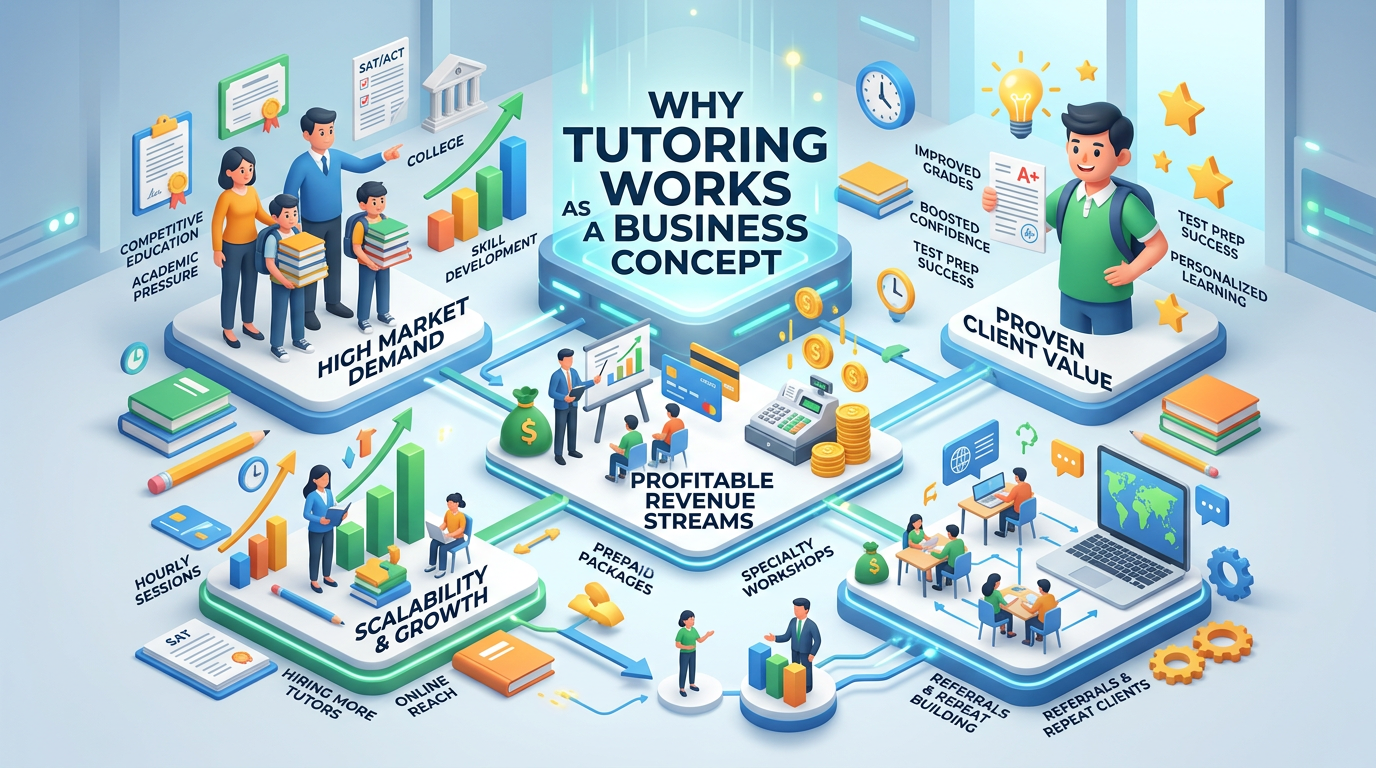
Why Tutoring Works So Well as a Business
The economics of tutoring are beautifully simple. You have knowledge. Someone else wants that knowledge. You sell access to it, one hour at a time, at rates that far exceed most part-time work. There’s no startup cost, no inventory, no complicated business setup. You just need to know something and be able to explain it clearly.
The repeat booking nature of tutoring is also what makes it genuinely sustainable. A student who books you for GCSE Maths prep in September is likely to continue weekly right through to May exams. That’s potentially eight months of weekly bookings from a single client. Find five students like that and you have a reliable income stream that continues paying week after week.
What Subjects Can You Teach?
Maths and English are the perennial bestsellers. At every age level from primary school through to A-Levels, demand for these subjects is constant and never drops. Science subjects — biology, chemistry, physics — are close behind, particularly for GCSE and A-Level students preparing for high-stakes exams.
Exam preparation in general commands premium rates. Parents preparing children for the 11+ selective school exams, GCSE mock season support, and A-Level revision intensives are all high-value booking types where parents are highly motivated and willing to pay well for a tutor who delivers results.
Don’t overlook adult learning either. Teaching English to non-native speakers is in massive demand across the UK and globally. Adults who need business writing skills, help with computer literacy, or preparation for professional qualifications are a completely separate and underserved market with higher hourly rates than school-age tutoring.
The Platforms That Bring Students to You
You don’t need to advertise yourself from scratch. Several established platforms match tutors with students who are already looking.
Tutorful is the largest UK tutor platform and has an extensive parent database searching for tutors across hundreds of subjects. Creating a profile is free and the platform handles bookings, payments, and reviews. They take a commission on sessions booked through the platform but handle all the administration for you.
MyTutor specialises in online tutoring and has particularly strong demand from students wanting help with university entrance preparation as well as GCSE and A-Level subjects. First Tutors is a more traditional directory-style platform with a premium parent audience willing to pay higher rates for experienced tutors.
Listing on two or three platforms simultaneously is the quickest way to fill your schedule, as different platforms attract different types of students.
Going Online Changes Everything
Teaching online via Zoom or Google Meet removes one of the biggest constraints of in-person tutoring — travel time. When you’re tutoring in person, the time between sessions is often wasted on commuting. Online, you can finish one session and start the next five minutes later.
This efficiency means you can serve more students per week without working longer hours. Many online tutors charge a small premium for the added convenience they provide to families who don’t need to arrange transport. Going online also opens up your potential client base from your local area to anywhere in the country — or the world for English language tutoring.
Practical Tips for Getting Your First Student
Your first student is always the hardest to find. After that, referrals and platform reviews do most of the work. To get started, create profiles on two or three platforms with a clear, specific bio that explains exactly which subjects you teach, to which age groups, and what results you help students achieve.
Post in local Facebook parent groups and community forums. Offer a free initial session to your first three students in exchange for honest reviews on your chosen platform. Reviews are the currency of tutoring platforms — five strong reviews transform your profile from invisible to in-demand.
Tell everyone you know that you’re available. The parent of a friend’s child, a colleague with school-age kids, a neighbour — word of mouth is consistently how the most successful tutors build their initial client base.
Frequently Asked Questions
Do I need teaching qualifications to tutor privately? No formal qualifications are required to tutor privately in the UK. Most parents care about subject knowledge, the ability to explain clearly, and evidence of results — not teaching certificates. DBS checks are recommended and some platforms require them.
What age groups are easiest to start with? Primary school children (ages 7–11) are often easiest for new tutors because the subject content is straightforward and parents at this level are focused on confidence-building rather than exam technique. However, secondary school subjects pay higher rates.
How do I handle a student who isn’t making progress? Honest, regular communication with parents about their child’s progress is essential. Adjust your teaching approach when something isn’t working, involve the student in identifying what helps them learn best, and be transparent about timelines for improvement.
Can I tutor multiple subjects? Yes, many tutors teach multiple related subjects. Maths and science, English and history, or a range of primary subjects are natural combinations. Specialising in one or two subjects initially makes it easier to build a reputation.
Is online or in-person tutoring better for income? Online tutoring is generally more efficient and allows you to serve more students per week. In-person tutoring can command slightly higher rates in some markets because parents value the personal presence. Many successful tutors offer both and let students choose.
Follow @nithin.gotmenow on Instagram for daily business ideas and practical earning guides — honest, actionable, and always beginner-friendly.


Leave a Reply